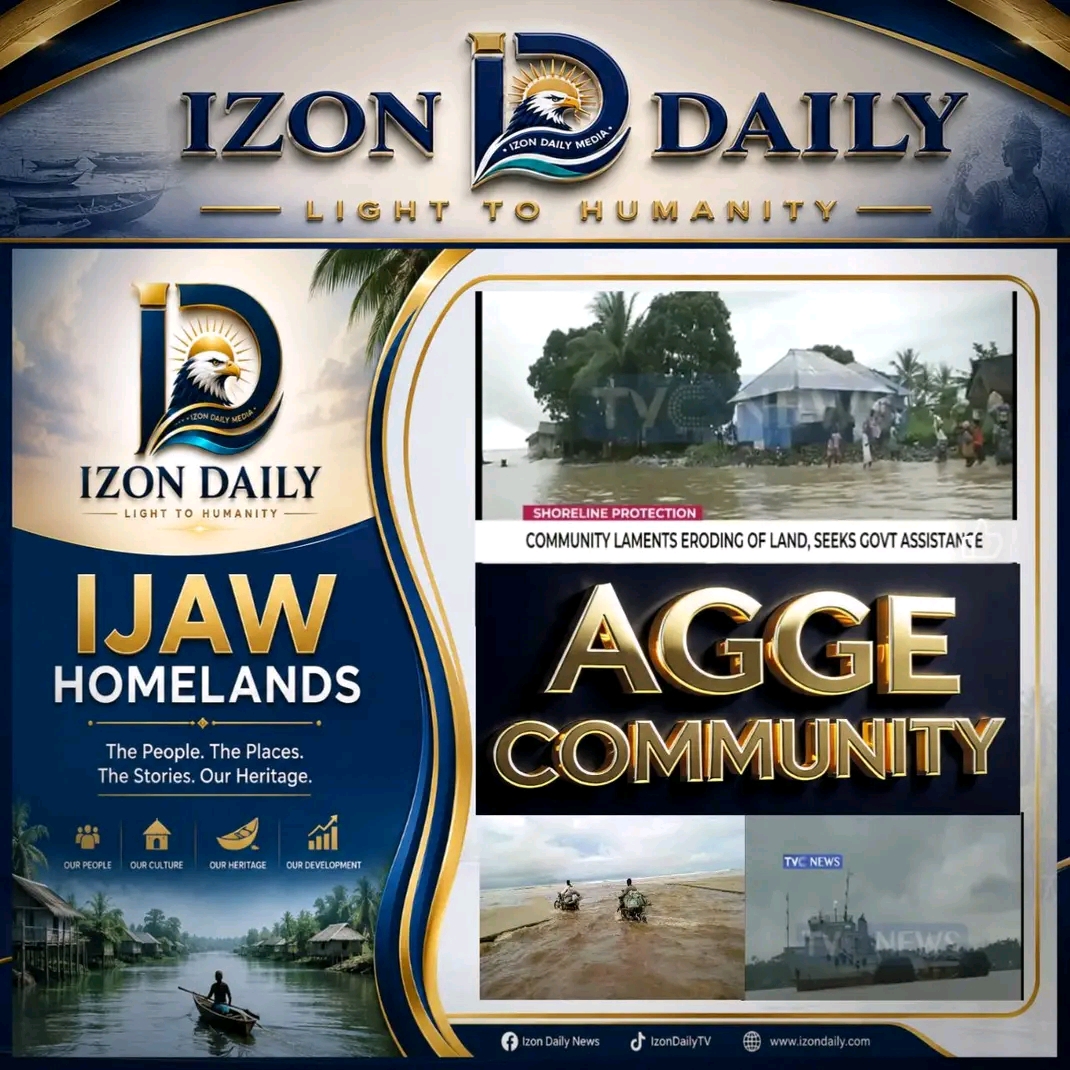
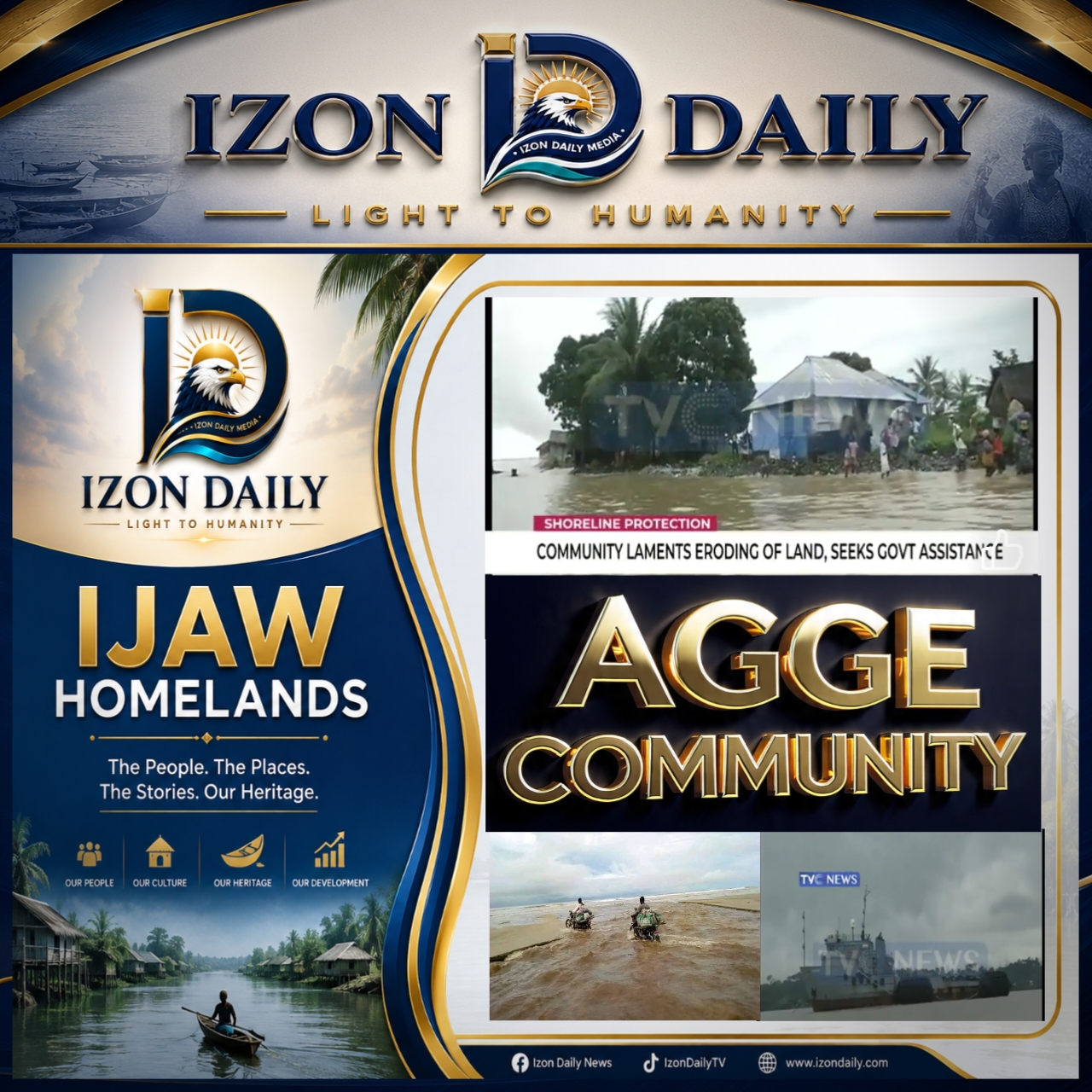
Agge is an Ijaw homeland and an ancient human settlement in Kou Kingdom, along the Atlantic coast of Bayelsa State, within Ekeremor Local Government Area. The name Agge is also associated with a wider network of communities and territories connected by the waterways and coastal environment around the Atlantic Ocean. It is a federation of communities straddling Bayelsa and Delta States, with areas associated with Ekeremor in Bayelsa State and Burutu in Delta State.
This geography is central to understanding Agge. The community is situated around the Ramos River estuary, where the river empties into the Atlantic Ocean. Its history, economy, movement and way of life have consequently developed in close relationship with the river and the sea.
For generations, the waterways have provided both transportation and livelihood. They have connected Agge to neighbouring communities, brought traders and fishermen into the area, and supported an economy extending beyond the immediate settlement.
𝗔 𝗖𝗢𝗠𝗠𝗨𝗡𝗜𝗧𝗬 𝗕𝗨𝗜𝗟𝗧 𝗔𝗥𝗢𝗨𝗡𝗗 𝗪𝗔𝗧𝗘𝗥
Agge's relationship with the water is not simply geographical. It is central to the community's history and economic life. Fishing has long been one of the area's defining activities. Fish and crayfish are among the products associated with the community, while fish processing and trading have provided livelihoods for residents and attracted people from outside Agge.
During active fishing periods, people travel from places as far as Ondo State and Ghana to engage in commercial fishing. Some spend months in the area, catching and drying fish before moving their products through Agge for sale or onward distribution.
Historical accounts describe Agge as a longstanding fishing depot where people from surrounding areas gathered during fishing seasons to catch, process and trade fish. This helped establish the community as more than a residential settlement. It became a point of contact within the wider coastal economy.
The waterways also determine how people and goods move. Boats remain central to transportation, while the condition of the river, shoreline and surrounding marine environment directly affects livelihoods.
When the water changes, the economy changes with it.
𝗔𝗚𝗚𝗘 𝗠𝗔𝗥𝗞𝗘𝗧: 𝗪𝗛𝗘𝗥𝗘 𝗖𝗢𝗠𝗠𝗘𝗥𝗖𝗘 𝗠𝗘𝗘𝗧𝗦 𝗧𝗛𝗘 𝗪𝗔𝗧𝗘𝗥𝗪𝗔𝗬𝗦
Agge Market is an important part of the community's commercial life. For residents of Agge and people from surrounding communities within Kou Kingdom, it provides a place for the exchange of food, fish, household goods and other commodities.
Its location gives the market an advantage. Goods can move through the waterways, while fishing communities and traders use Agge as a meeting point. Yet the market's potential remains greater than its present condition.
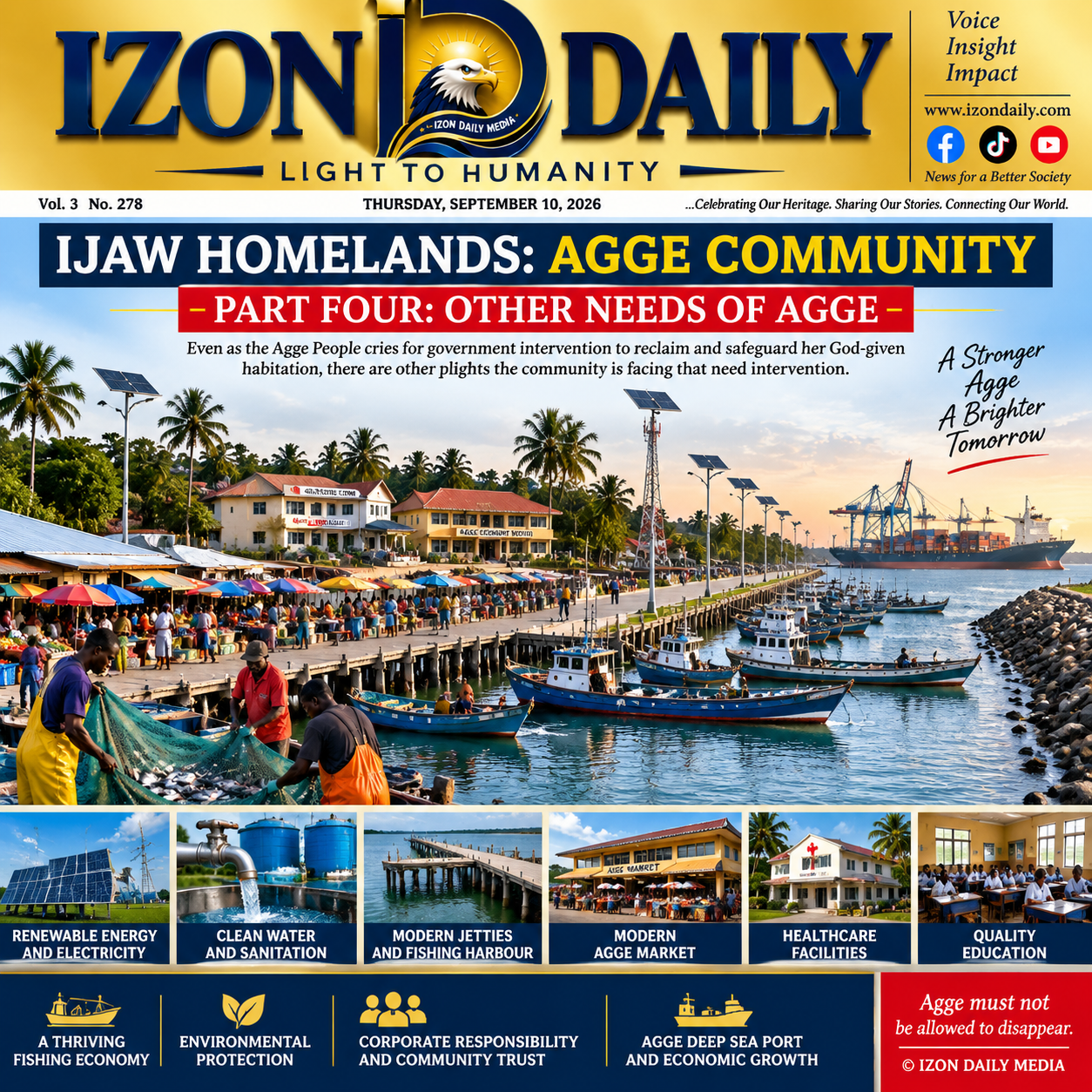
A properly planned and modern market could become a stronger commercial centre for Kou Kingdom and surrounding coastal communities. Improved stalls, storage facilities, sanitation, clean water, electricity, access infrastructure and other basic trading facilities would create better conditions for traders and consumers while strengthening the local economy. The market could therefore become an important part of a broader commercial strategy for Agge.
𝗧𝗛𝗘 𝗣𝗘𝗢𝗣𝗟𝗘 𝗢𝗙 𝗔𝗚𝗚𝗘
Behind Agge's geography and economy are the people whose lives have been shaped by the community and its waterways. They include fishermen, traders, business owners, students, women, young people, elders and families who have built their lives around the coastal environment.
Their relationship with the environment is practical and deeply rooted. The river provides transportation. The sea provides livelihood. The market provides commerce. The community provides identity.
Living in a remote coastal environment has also required resilience. Residents have had to adapt to the challenges of distance, limited infrastructure and the changing conditions of the surrounding environment.
But resilience should not be confused with the absence of need.
Agge still requires infrastructure capable of supporting a modern community. Roads and waterways need attention. Clean water, healthcare, education and telecommunications remain essential. Environmental protection is equally important because the physical survival of the community is tied directly to its environment.
Agge's people should not have to choose between preserving their homeland and having access to basic development.
𝗔 𝗛𝗢𝗠𝗘𝗟𝗔𝗡𝗗 𝗢𝗡 𝗧𝗛𝗘 𝗔𝗧𝗟𝗔𝗡𝗧𝗜𝗖
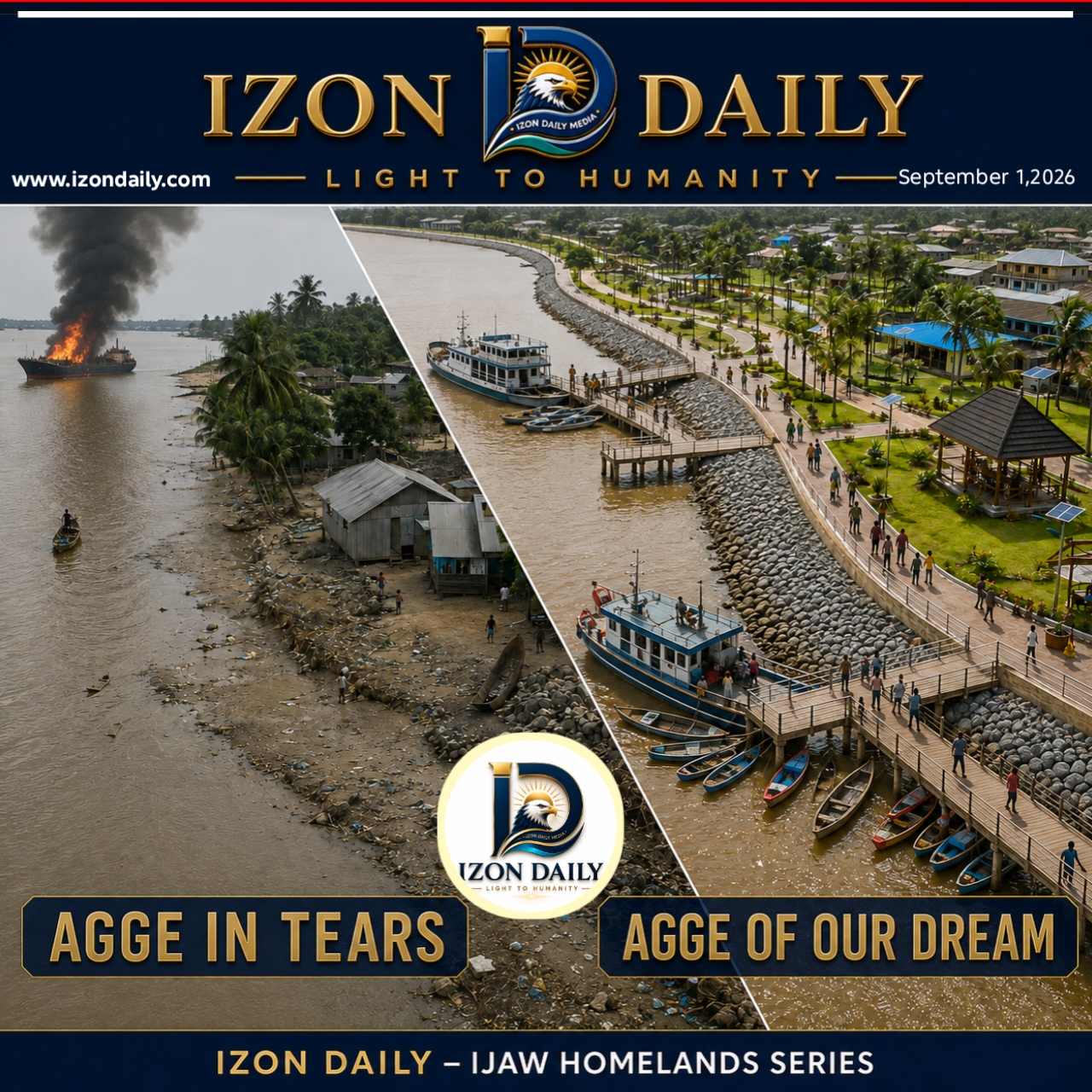
Agge's greatest geographical advantage is also one of its greatest threats. The Atlantic provides access to fishing grounds and maritime opportunities, but the same coastline exposes the community to waves, tides, flooding, storm activity and coastal erosion.
Historical reporting has documented residents' fears that the ocean could eventually overwhelm the community. One resident recalled that a place where he had first stepped onto Agge soil as a child had disappeared, with the community shifting location over time as the shoreline advanced.
That testimony gives a human dimension to the changing geography. On a map, Agge may appear simply as a coastal settlement. For someone who grew up there, however, a changing shoreline can mean the disappearance of places associated with childhood, family and community memory.
Land can carry more than physical value. It can hold family history, graves, homes, places of worship, economic spaces and the memories of generations. That is why the future of Agge cannot be treated only as an environmental question. It is also a question of homeland.
𝗧𝗛𝗘 𝗙𝗨𝗧𝗨𝗥𝗘 𝗢𝗙 𝗔𝗚𝗚𝗘
Agge possesses several assets that could support sustainable economic development.
It has access to the Atlantic. It sits around an important river system. It has a longstanding fishing tradition, an established commercial culture and connections with communities across Bayelsa and Delta States. Its people also possess generations of knowledge about fishing, waterways, marine movement and coastal life. The challenge is turning these advantages into sustainable opportunities while protecting the community itself.
Agge's development should therefore be designed around its coastal reality. Fishing, marine commerce, transportation, fish processing, storage, boat services, trade and other water-based economic activities could provide opportunities for residents, particularly young people.
Such development would require investment in basic infrastructure and environmental protection. Better fishing facilities, improved markets, reliable electricity, clean water, storage, transportation and shoreline protection would allow the local economy to grow without weakening the community's ability to survive.
The central question is not simply how to develop Agge. It is how to protect a living Ijaw homeland while creating the conditions that allow its people to prosper there.
𝗖𝗢𝗠𝗠𝗨𝗡𝗜𝗧𝗬 𝗩𝗢𝗜𝗖𝗘𝗦
In preparing this edition of IJAW HOMELANDS, 𝘐𝘻𝘰𝘯 𝘋𝘢𝘪𝘭𝘺 spoke with people in Agge about their community, its people and the challenges confronting them. Their accounts provide a firsthand perspective on life in Agge. They also point towards a larger story involving the environment, development, livelihoods and the future of the homeland.
Agge is not simply a place facing problems.
It is a community with a history, an economy, a culture and a future that deserves serious attention.
𝗖𝗢𝗡𝗖𝗟𝗨𝗦𝗜𝗢𝗡
Agge is an Ijaw homeland shaped by the meeting of people, river and ocean. Its fishing traditions, commercial activity and connections across the Niger Delta have given it significance beyond its physical size. But the same Atlantic that has sustained the community is also advancing against its shoreline.
The consequences of that struggle, including erosion, ocean surge, disappearing land and the efforts to protect the community, will be examined in Part Two of IJAW HOMELANDS: AGGE COMMUNITY.
𝑻𝑶 𝑩𝑬 𝑪𝑶𝑵𝑻𝑰𝑵𝑼𝑬𝑫...
© 𝗜𝗭𝗢𝗡 𝗗𝗔𝗜𝗟𝗬 𝗠𝗘𝗗𝗜𝗔