By Kune N. Igoni
When Bayelsa State was created on 1 October 1996 out of the old Rivers State, the announcement fulfilled a long-standing aspiration of the people for a state they could call their own. But state creation by proclamation was the easy part. The more difficult task was turning that proclamation into a functioning state. Yenagoa suddenly became a capital with government offices to establish civil servants to accommodate roads to improve and institutions to build. A place that had not been designed for the sudden responsibilities of a capital had to grow into them almost overnight.
Those who experienced the early years will remember that getting to the new capital could itself be part of the story. The TATA Bus became one of the memorable characters of the Port Harcourt–Yenagoa journey, carrying passengers, traders, luggage, and assorted goods towards a capital still finding its feet. Around Ovom, Oyoyo Market, Onopa, and Amarata, people, vehicles, and merchandise created their own theatre. When the rains came, the puddles reminded everybody that Bayelsa might have received statehood, but infrastructure had not received the announcement at the same time.
Yet people came, and Yenagoa changed. The Mbiama–Yenagoa Road, now Chief Melford Okilo Road, became an important artery of the emerging capital. Hotels such as Aritalin and Parklane accommodated officials, politicians, contractors, journalists, and visitors. Civil servants settled in, businesses opened, houses appeared, and land that once attracted little attention suddenly discovered its commercial value. Bayelsa was building a capital while simultaneously learning how to run a state.
And there was food. If young Bayelsa had conducted an election for its unofficial state meal, fufu, farina, and fresh fish pepper soup might have won without litigation. Garri, plantain, periwinkles, and seafood sustained households and newcomers. Political meetings might end without agreement over appointments or contracts, but once food arrived, temporary consensus was usually possible.
Thirty years later, the transformation is unmistakable. Yenagoa has expanded, roads and bridges have increased, institutions have matured, and educational, judicial, and administrative structures have grown. Bayelsans have distinguished themselves nationally and internationally in politics, law, sports, academia, business, and public service. Most remarkably, a young state produced a President of the Federal Republic of Nigeria in Dr. Goodluck Ebele Jonathan.
In thirty years, Bayelsa has travelled from military administration into democratic government, passing through successive civilian administrations, political upheavals, court battles, and changes of leadership. Governors came with different programmes, personalities, and promises; some projects endured, others changed names, and a few joined that distinguished Nigerian institution known as the “ongoing project.” Through it all, the state continued to grow.
The journey was not always peaceful. Kidnapping, sea piracy, militancy, oil theft, pipeline vandalism, and other forms of criminality troubled the state at different periods. There is another Bayelsa paradox here: waterways that sustained generations of fishermen and traders sometimes became corridors of insecurity. The fisherman and the sea pirate may travel the same creek, but they represent two entirely different futures; one seeking livelihood from the water, the other making the water dangerous for everyone.
Bayelsa's sporting story also travelled beyond its creeks. Daniel Igali carried a wrestling culture deeply familiar to our communities onto the international stage, while Bayelsa United and Bayelsa Queens strengthened the state's football identity. Culture survived alongside development: regattas, festivals, Owigiri music, Iworoko dances, and traditional celebrations remind us that modernisation should not require a people to surrender their memory.
But thirty is an interesting age. At ten, a child may blame the parents. At twenty, circumstances can still receive considerable attention. At thirty, people begin asking what you have done with your inheritance.
And Bayelsa inherited plenty.
Here lies perhaps its greatest paradox. Bayelsa sits upon enormous petroleum wealth, yet communities have also carried the environmental and social burdens of extraction. Oil brought revenue, political importance, and opportunity, but pollution and environmental degradation damaged livelihoods in some of the same lands and waters from which that wealth came.
The next thirty years must, therefore, look increasingly beyond crude oil, to agriculture, gas development, technology, tourism, and enterprise. But perhaps one of our greatest opportunities has been flowing around us all along: the blue and marine economy.
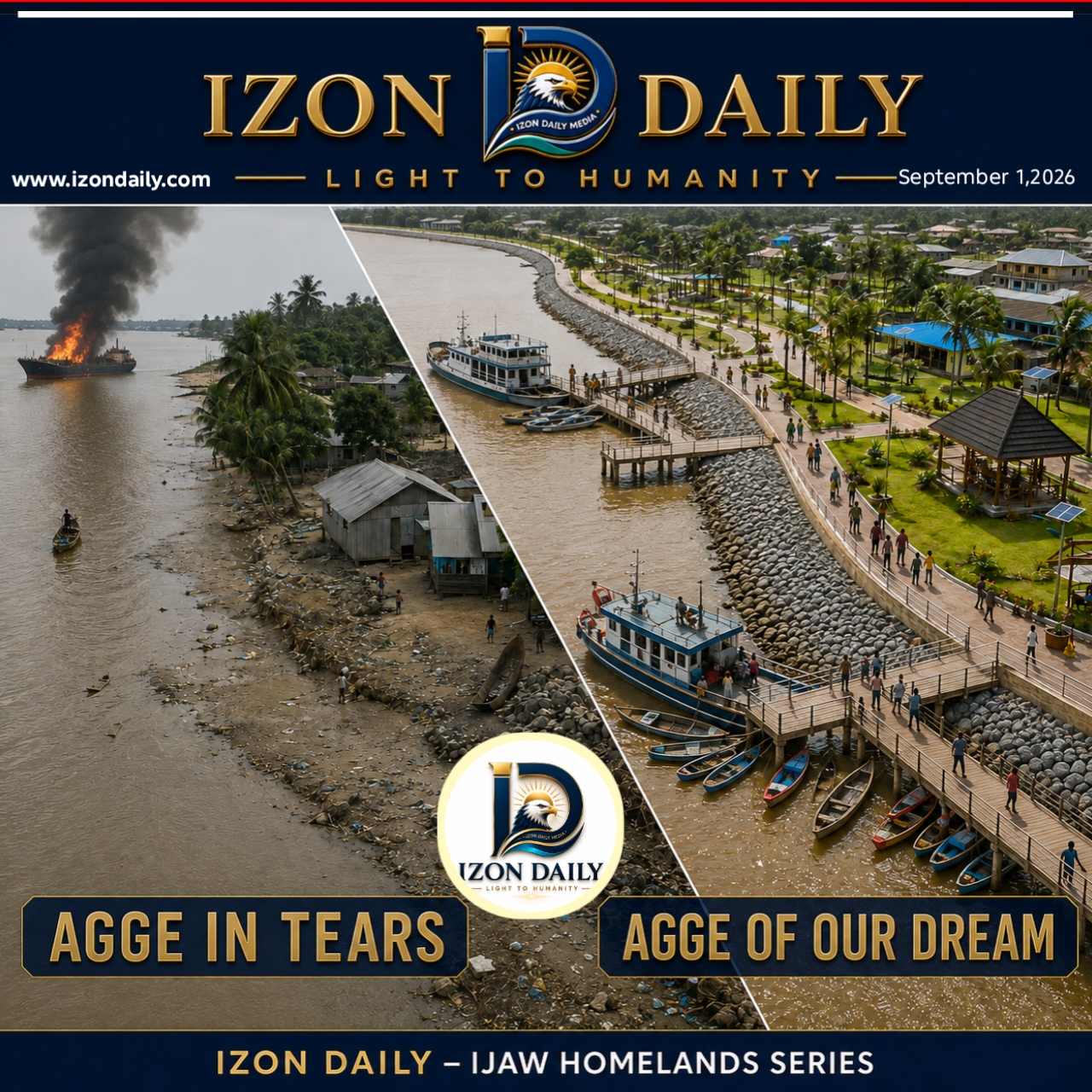
Bayelsa is not merely a state with rivers; it is a state shaped by water. Its creeks, estuaries, rivers, and long Atlantic shoreline are economic assets provided by geography. Coastal communities such as Brass, Akassa, Agge, and Koluama II, among others, have lived with the sea for generations, building livelihoods around fishing, transportation, and trade.
The possibilities are enormous: fisheries, aquaculture, seafood processing, maritime transportation, ports and logistics, boatbuilding and repairs, coastal tourism, and marine services. Imagine cold-storage and processing facilities near fishing communities, efficient water transportation, boatyards employing young people, maritime training institutions, and businesses connecting Bayelsa to the wider Atlantic economy.
The paradox is striking: we have lived beside the Atlantic while much of our economic imagination remained underground.
Oil taught us to look downward. The blue economy asks us to look outward.
But water will not automatically make us prosperous. Investment, infrastructure, security, environmental protection, technology, and skills must follow. A polluted creek cannot sustain a fishing economy, and an unsafe waterway cannot attract maritime investment. To unlock the wealth of our waters, we must also protect and secure them.
So, as Bayelsa clocks thirty on 1 October 2026, there is much to celebrate and even more to contemplate. Let the drums sound, the regattas sail, and the old photographs return. Let those who travelled in the early TATA Bus tell younger Bayelsans how far the journey has been. And, certainly, let there be fufu and fish.
But somewhere between the speeches and celebrations, Bayelsa must look into the mirror. The child born in 1996 is now thirty. It has survived, grown, achieved, stumbled, and learnt.
The question is no longer whether Bayelsa deserved to become a state. History has settled that. The question now is what we will do with the state we fought so hard to have.
The first thirty years gave us Bayelsa. The next thirty must unlock its possibilities, from the resources beneath us to the Atlantic before us.
Kune Nimi Igoni
Yenagoa, Bayelsa State