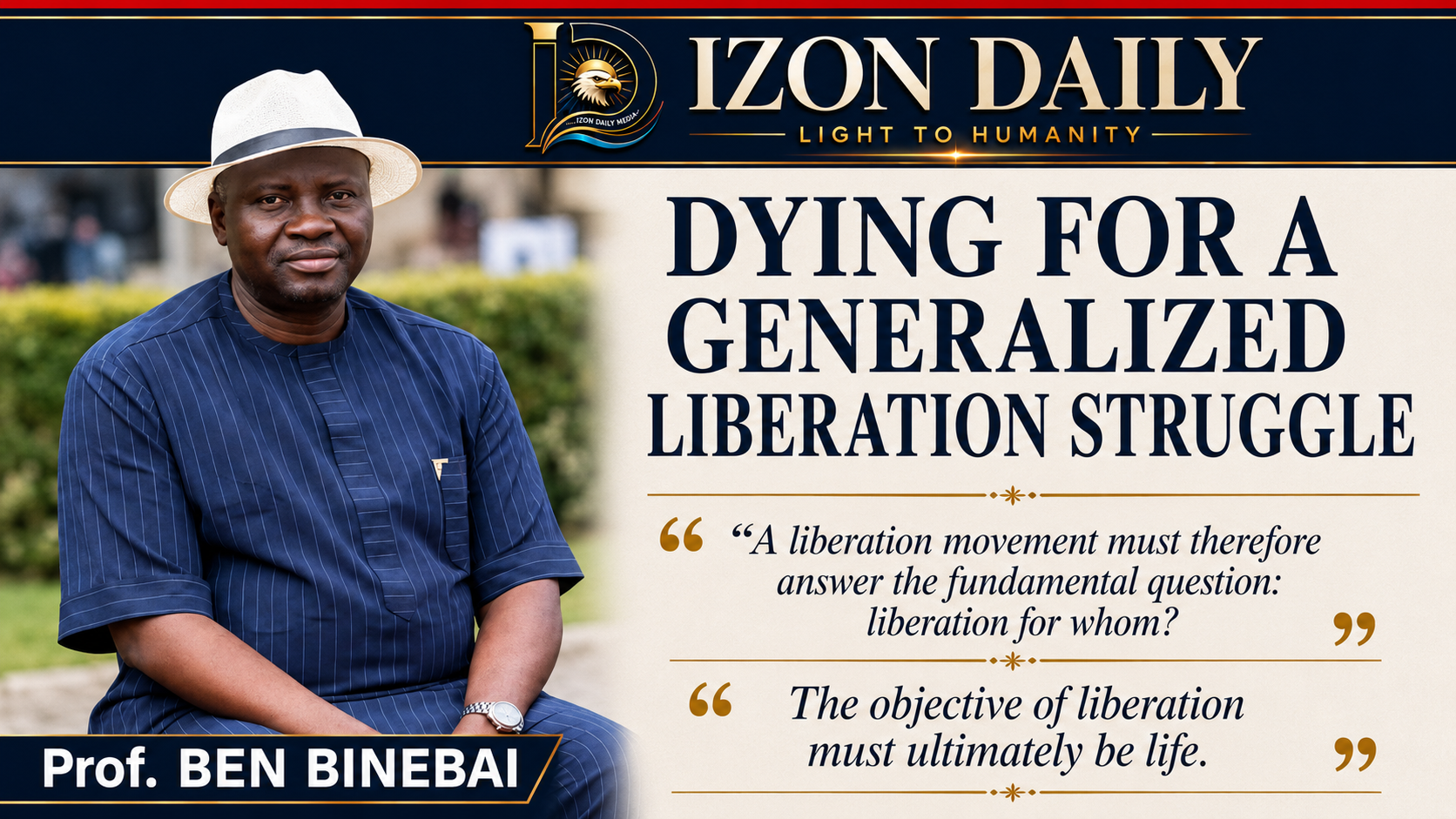
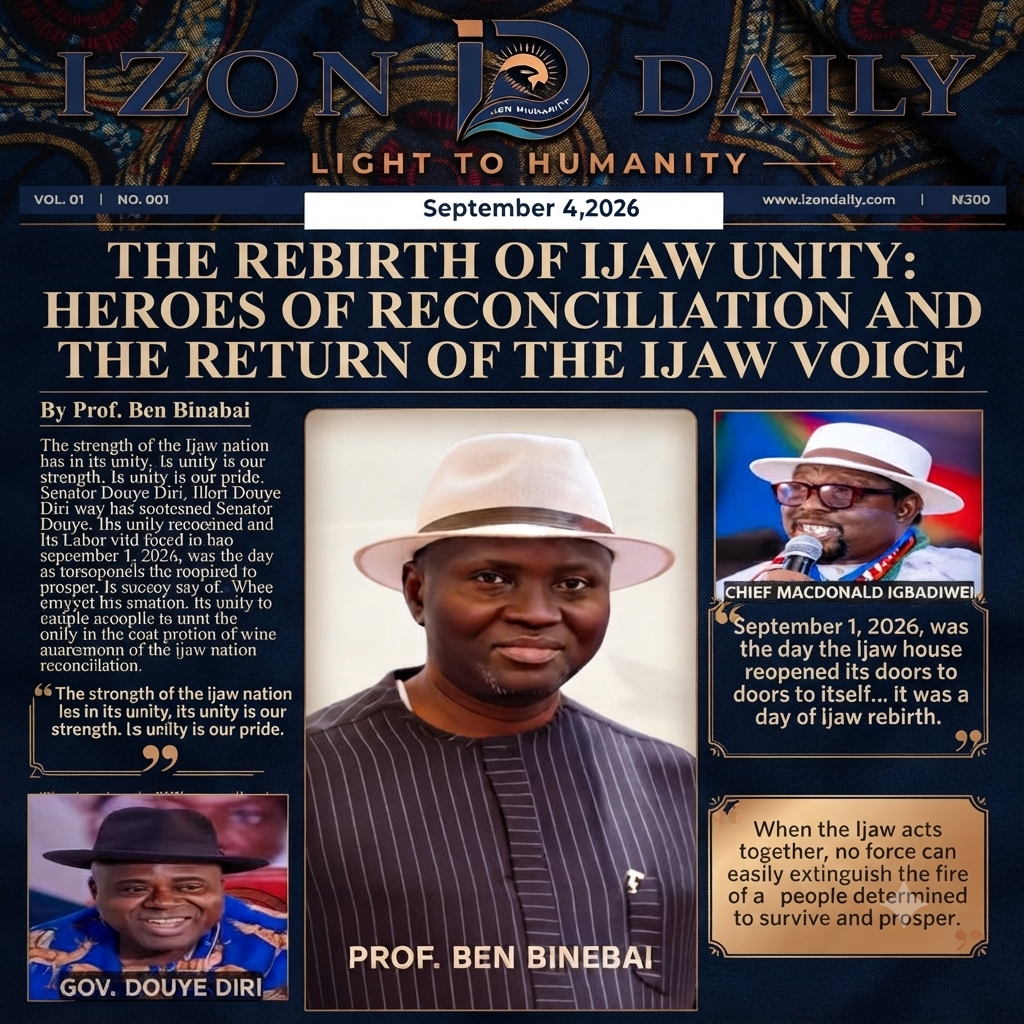
By Prof. Ben Binabai
The Ijaw are an ancient ethnic nationality whose historical presence is deeply rooted in Nigeria’s coastal belt. Drawing on historical traditions and linguistic scholarship, the Ijaw people are recognised as one of the longstanding peoples of the Nigerian region. Yet, paradoxically, a people with such a deep historical presence have, for generations, experienced political subordination within the Nigerian federation, particularly amid the complex circumstances created by the vast oil wealth beneath their ancestral lands.
This is the central contradiction of the Ijaw experience: a people endowed with immense resources have too often been denied commensurate influence and benefits. Oil gave the Niger Delta strategic importance, but it did not automatically confer political power on the Ijaw. Wealth without agency became a paradox. Resources without corresponding influence became a burden. The Ijaw nation gradually found itself confined within what may be described as the silent space of subalternisation—a condition characterised by diminished agency, political fragmentation, institutional weakness and the systematic suppression of its collective voice.
History, however, teaches that no people can remain permanently voiceless.The Ijaw therefore created a platform through which their collective voice could be expressed. That platform is the Ijaw National Congress (INC). Established in 1992 at Patani in Delta State, the Ijaw National Congress emerged as an apolitical, socio-cultural organisation and the apex institutional voice of the Ijaw people in Nigeria. It was conceived not as a political party, but as a national platform for articulating, negotiating, defending and advancing the collective interests of the Ijaw nation.
For nearly a quarter of a century, the INC has navigated Nigeria’s complex political landscape. It has endured turbulent currents, internal disagreements, moments of achievement and periods of institutional uncertainty. Different leaders have carried its mandate at different historical moments. Yet, beneath all these transitions, one fundamental truth has remained constant:
The INC is greater than any individual. The Ijaw nation is greater than any faction. And the destiny of the Ijaw people is greater than any election.The strength of the Ijaw nation lies in its unity. Its unity is our strength.vIts unity is our pride. Its unity is the foundation of peace in Ijawland. Its unity is the bridge between our history and our destiny.vIts unity is the canoe upon which the aspirations of generations travel towards fulfilment. When that canoe is divided, the river does not stop flowing; the passengers simply lose direction.
Disunity does not merely weaken the Ijaw nation. It undermines its aspirations, delays its progress, weakens the protection of its collective interests and fragments its voice and agency. Most dangerously, it creates the political opening through which the dominant centre can once again reinforce the conditions of subalternisation and silence.
That is why the crisis that followed the April 4th 2026 general elections of the Ijaw National Congress was not merely an internal organisational disagreement. The challenge to the outcome that produced the presidency of High Chief Hon. Barrister MacDonald Ebi Igbadiwei and members of his Executive Council had implications far beyond the individuals involved. It threatened the institutional voice of an entire nation.
For a time, the INC was caught in a storm of disagreement. Its machinery was effectively paralysed, its collective voice became fractured and the house of the Ijaw nation appeared once again to be developing serious cracks. But every great nation reaches moments when history poses a fundamental question to its leaders: Will you allow your differences to undermine your common destiny, or will you subordinate personal grievances to the survival and progress of your people?
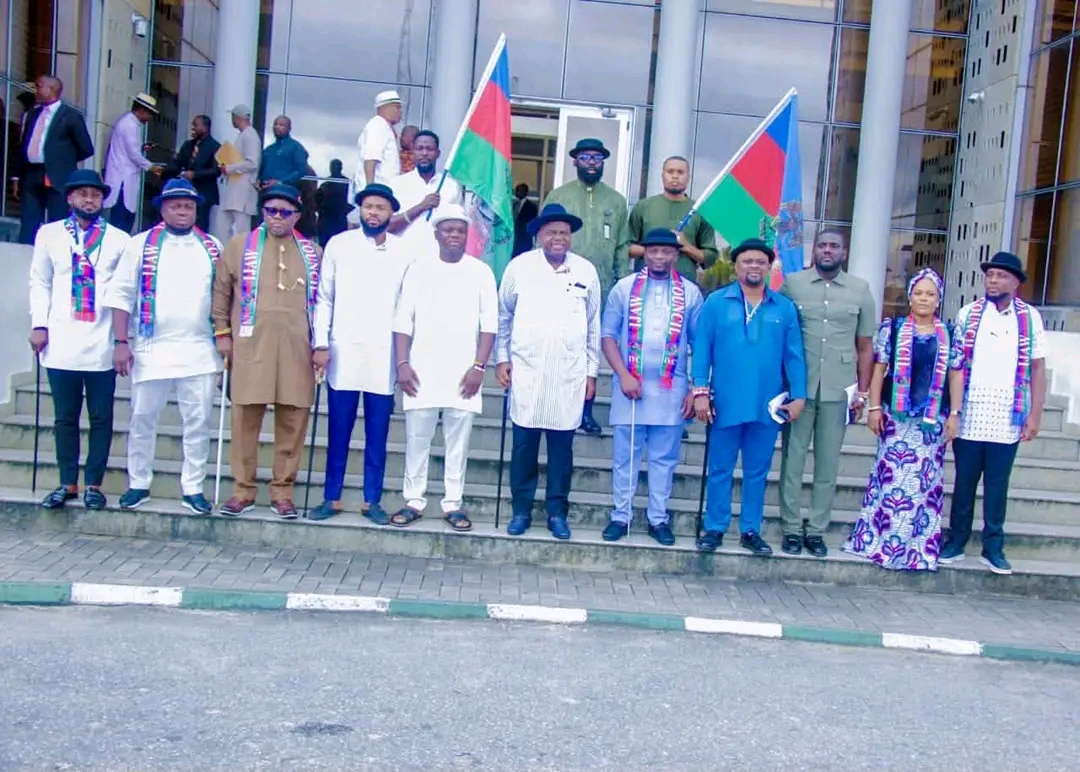
At that decisive moment, Senator Douye Diri, Governor of Bayelsa State and Governor-General of the Ijaw Nation, himself a veteran of the Ijaw National Congress, intervened.He condemned the disunity and acted decisively to restore the broken bridge. He established a reconciliation committee under the chairmanship of Barrister Matthew Seiyefa, providing the Ijaw nation with an institutional pathway back to dialogue, understanding and unity.
Then came September 1, 2026.That date should not be remembered merely as another entry on the Ijaw calendar. It should be remembered as the day the Ijaw house reopened its doors to itself. It was the day the components of Ijaw leadership were once again brought into alignment.b It was the day the broken channels of communication were repaired. It was the day the fire of Ijaw nationalism was rekindled. It was the day the sun of collective aspiration rose once again over the Ijaw nation.It was the day the Ijaw people demonstrated that disagreement need not become destruction, that contest need not become conflict and that justice can provide a pathway to reconciliation. In a profound historical sense, it was a day of Ijaw rebirth.
The credit for this rebirth belongs to many.
It belongs to Senator Douye Diri, the Governor-General of the Ijaw Nation, whose intervention provided the political framework for reconciliation. It belongs to High Chief Government Oweizide Ekpemupolo, Tompolo, the multidimensional General Officer Commanding of the new generation of Ijaw nationalism, whose patriotism and commitment to the collective destiny of the Ijaw people remain significant to this historic moment. It belongs to Barrister Matthew Seiyefa and the members of the reconciliation committee, who undertook the difficult task of bringing a divided house back to the same table. There is, however, another group that deserves a special place in the historical memory of this moment.
They are the true heroes of reconciliation. The champions of peace. The champions of unity.
The champions of progress. The champions of development. They are the presidential aspirants who disagreed with the election outcome but chose the path of justice rather than permanent division: Professor Osaisai, Alabor Nengi James, T. K. Ogoriba and Admiral Yanga.
History should remember these men not merely as contestants in an INC election, but as individuals who demonstrated that the Ijaw nation comes first. They contested. They raised questions. They sought justice. But when the broader interests of the nation required sacrifice, they were able to subordinate personal disappointment to collective healing. That is statesmanship.That is patriotism.
That is the demanding ethic of nation-building.
They overcame their personal grievances in order to help heal the wounds of their people. They demonstrated that, sometimes, the greatest victory is not defeating an opponent but preserving the institution to which all parties belong. They lost nothing by choosing unity; they gained a lasting place in history. They are flowers in the garden of Ijaw reconciliation. Their names should be remembered as part of the story of how a wounded house refused to remain divided.
There were also the voters—the ordinary Ijaw men and women whose votes conferred democratic legitimacy on the leadership of Barrister MacDonald Ebi Igbadiwei.
Democracy is not merely the right to vote. It also requires the courage to respect the outcome of a legitimate process once due concerns have been properly addressed. The Ijaw electorate has spoken. The new leadership must now respond—not through rhetoric alone, but through measurable performance. The presidency of Barrister MacDonald Ebi Igbadiwei therefore carries not only the authority of an election, but also the weight of expectation.
It is a leadership that must transform reconciliation into development, unity into political capital, political capital into effective negotiation and negotiation into tangible benefits for the Ijaw nation. It is a leadership now positioned to benefit from the support of the Government of Bayelsa State, the goodwill of Ijaw leaders and the mandate of the electorate.
That support, however, must become a covenant. A covenant to build. A covenant to unite.A covenant to defend. A covenant to negotiate. A covenant to reposition the Ijaw nation within the Nigerian federation.
The task before the new INC leadership is substantial.
It must address the complex issues of Ijaw political representation, economic empowerment, environmental justice, cultural preservation, security, education, youth development and the future of the Niger Delta in a post-oil Nigeria.It must begin to think beyond survival. The Ijaw nation must begin to think in terms of destination.
One such destination must be the historic project of building Ijaw City on Wilberforce Island, the ancestral homeland and symbolic heart of the Ijaw people. A people must have a geographical memory. A people must have a cultural capital. A people must have a place where their history can inform their future.
Wilberforce Island can become more than a university environment. It can become a national cultural and intellectual capital—a place where Ijaw history is documented, Ijaw languages are preserved, Ijaw scholarship is advanced, Ijaw arts are developed, Ijaw enterprise is encouraged and Ijaw identity is projected into the future.
This is how nations transform memory into institutions. This is how history becomes development. This is how ancestry becomes architecture. And this is how a people move from the silent space into the speaking space; from voicelessness to agency; from fragmentation to collective power.
The mythology of the Ijaw has always recognised the importance of the river. The river separates, but the canoe connects. The river creates distance, but the paddle provides direction. The river may be turbulent, but a united crew can still navigate its waters.
Today, the Ijaw nation is once again in the canoe.
The question is no longer who sat at the front yesterday or who held the paddle yesterday. The question is: Who will paddle with us today? The river ahead is vast. The waters of Nigerian politics are deep. The currents of the post-oil economy are unpredictable.
The struggle for resources, recognition and political influence will not disappear simply because reconciliation has been achieved.
Reconciliation is not the destination. Reconciliation is the beginning of the journey.
The new INC leadership must therefore transform this historic moment into a new doctrine of Ijaw collective action:
One Nation. One Voice. One Congress. One Destiny. Let September 1, 2026, become more than a day of reconciliation. Let it become a doctrine.Let it become the day we learned that our differences can coexist with unity; that justice can coexist with peace; that competition can coexist with brotherhood; and that political ambition must ultimately yield to national destiny.The Ijaw nation has been tested by history. It has survived displacement, political marginalisation, environmental degradation, resource exploitation, institutional fragmentation and the turbulence of Nigerian politics.
Yet we remain. Still standing. Still speaking. Still dreaming. Still rowing. The river has not defeated us. The storms have not drowned us.The oil has not purchased our silence. And history has not finished writing our story. The time has therefore come to leave behind the politics of fragmentation and embrace the politics of collective destiny. Let the INC once again become the great speaking drum of the Ijaw nation. Let its voice be disciplined yet fearless. Let its leadership be united yet critical. Let its politics be strategic yet principled. Let its nationalism be expansive yet purposeful.
And let every Ijaw man and woman understand this enduring truth:
When the Ijaw stands together, the river becomes a road.When the Ijaw speaks together, silence becomes history.yWhen the Ijaw dreams together, destiny becomes possible.And when the Ijaw acts together, no force can easily extinguish the fire of a people determined to survive and prosper.
September 1, 2026, has given us another beginning. Let us not waste it. Let the wounds heal.Let the voices unite.Let the paddles move together.Let the canoe face the horizon. The Ijaw nation is awake again.This time, we must not merely return to the river.We must determine where the river takes us.For the next chapter of Ijaw history is not waiting to be discovered.It is waiting to be written—and we must write it together.