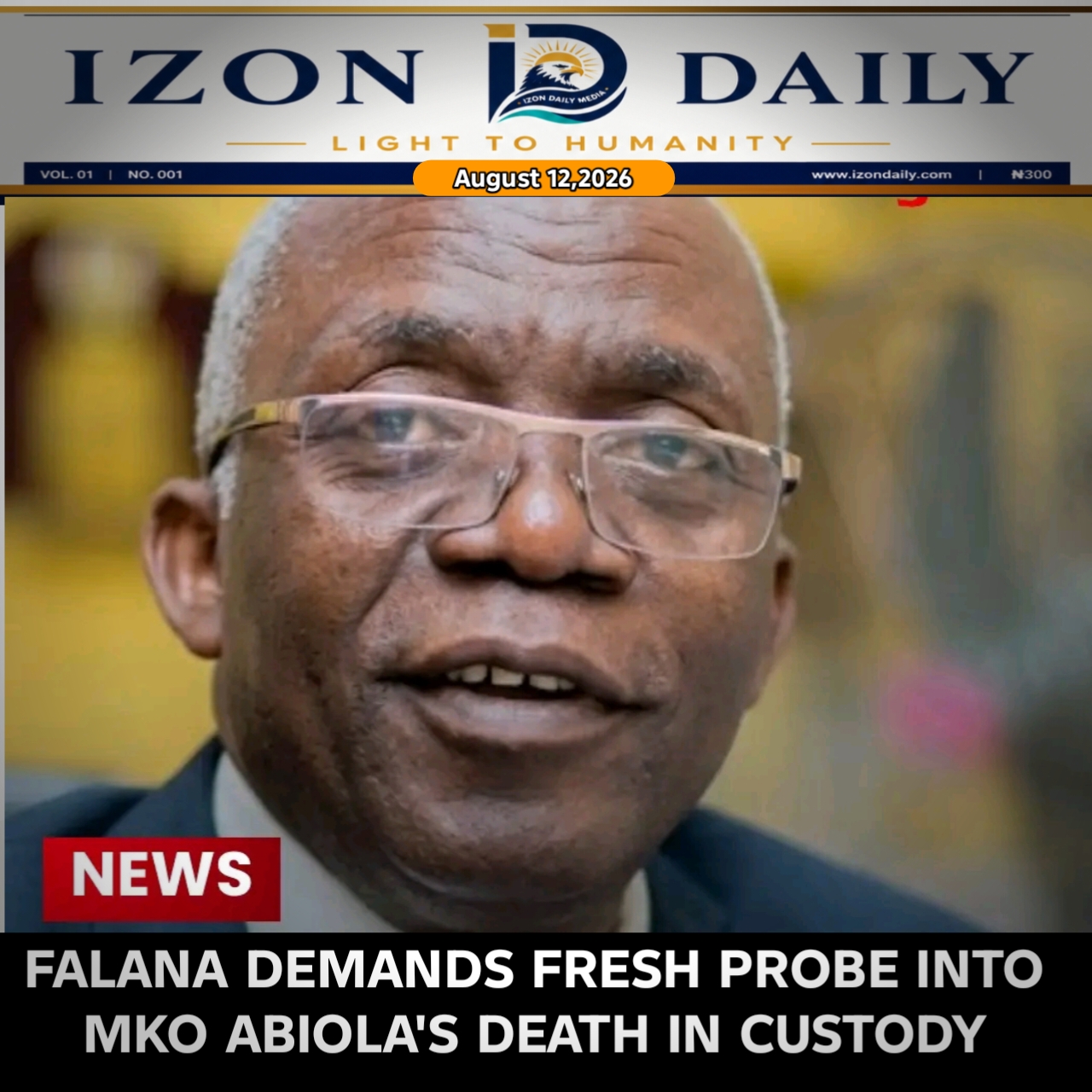
LAGOS — Human rights lawyer Femi Falana, SAN, has renewed calls on the Federal Government to reopen investigations into the death of Chief Moshood Kashimawo Olawale (M.K.O.) Abiola, who died in government detention in 1998.
Falana, who represented the Abiola family before the Oputa Panel on Human Rights Abuse, said fresh investigations were needed to resolve lingering questions about the circumstances of Abiola's death, in a statement sent to Vanguard.
Abiola, widely regarded as the winner of the annulled June 12, 1993 presidential election, declared himself president on June 12, 1994, and was subsequently arrested and detained by the military government of General Sani Abacha on treasonable felony charges.
According to Falana, Abiola spent nearly four years in custody despite growing concern over his health, including a 1998 visit by Archbishop Desmond Tutu, who pressed for his release on medical grounds. Falana noted that even after Abacha's death in June 1998 brought General Abdulsalami Abubakar to power and several political prisoners were freed, Abiola remained in detention. He died on July 7, 1998, shortly after meeting with a visiting American delegation.
The lawyer said the Oputa Panel, set up under the Olusegun Obasanjo administration to probe rights abuses of the military era, later examined the case in detail, but that Abubakar declined to testify before the panel about his role in Abiola's detention and death. Falana also referenced Abubakar's recent memoir, "Call of Duty," in which the former head of state denied poisoning allegations, citing a foreign pathologists' autopsy that attributed the death to natural causes. Falana argued this did not settle broader questions about how Abiola was treated in custody.
He pointed to testimony from Susan Rice, a member of the American delegation that met Abiola before his death, who reportedly noted signs of ill health during the visit. He also cited panel evidence about the serving of tea during that meeting: security officer ACP Zadok, who had routinely tasted Abiola's food and drink, testified he was pulled off duty the day of the delegation's visit, while then Chief Security Officer Major A.S. Aliyu confirmed Rice served Abiola tea without it being tasted first. Falana said this raised serious concerns about the security arrangements that day.
He further cited former UN Secretary-General Kofi Annan's memoir, which he said acknowledged that Abiola had been denied adequate medical care throughout his detention, and that Annan had personally urged Abubakar for his release, only for the military government to insist Abiola renounce his presidential claim as a condition.
Falana said the Oputa Panel ultimately concluded that the authorities of the time knew more than they disclosed about Abiola's death, linking it directly to his incarceration and the denial of proper medical attention, and describing the circumstances as suspicious. He said the panel's recommendation for a thorough probe remains as relevant today given the persistent disputes over what really happened.
Falana urged the Federal Government to act without further delay, arguing that a new investigation would finally give Nigerians clarity on the true cause of Abiola's death in custody.
#MKOAbiola #FemiFalana #June12 #OputaPanel #NigeriaHumanRights #AbdulsalamiAbubakar #SaniAbacha #NigerianHistory #Vanguard #ReopenInvestigation