

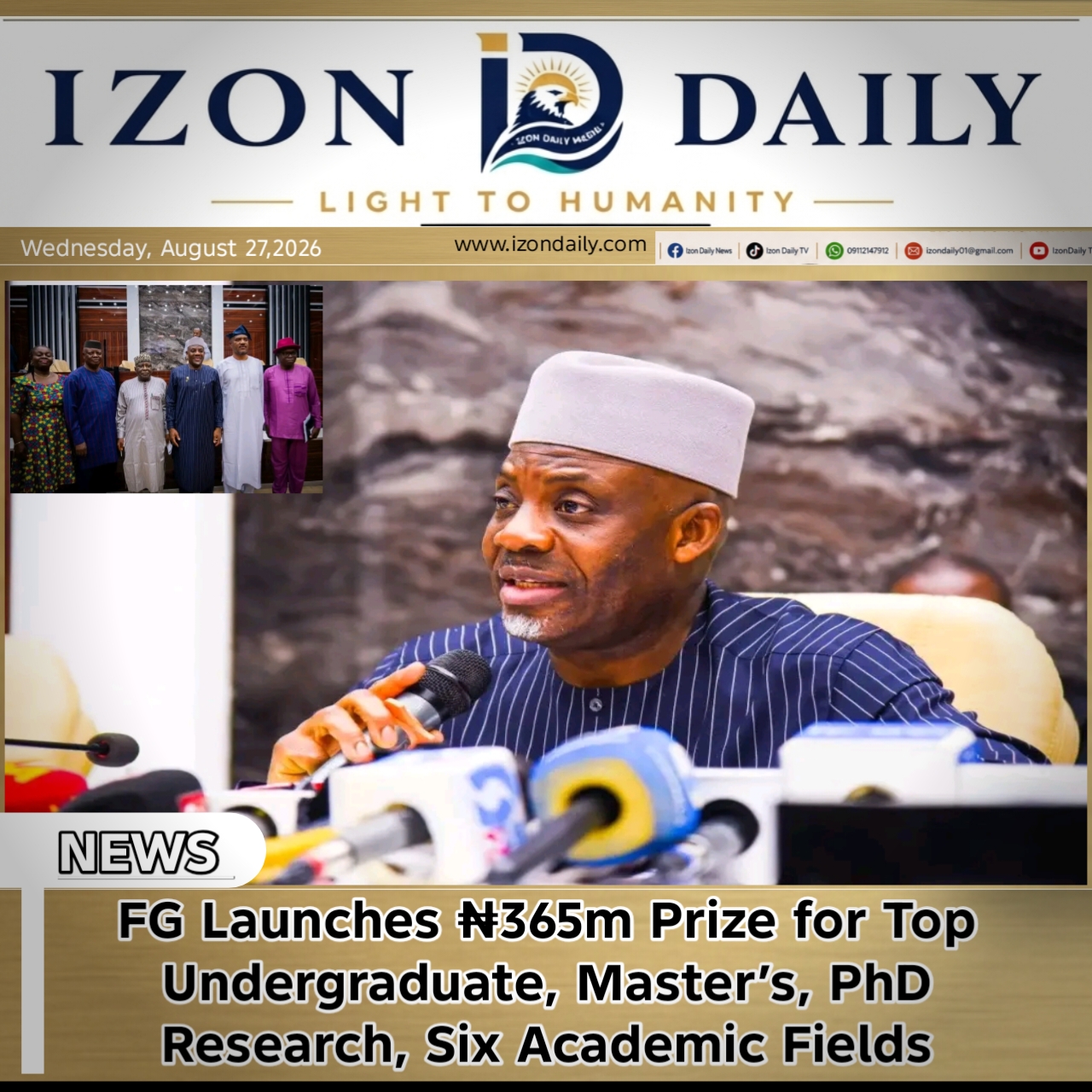
The Federal Government has introduced an annual ₦365 million prize programme to recognise outstanding academic research, innovation and intellectual excellence across Nigeria’s tertiary institutions.
The initiative, known as the Tertiary Institutions National Laureate Prize, will reward exceptional undergraduate dissertations, Master’s theses and doctoral research with strong commercial, industrial or developmental potential.
The programme was unveiled in Abuja by the Minister of Education, Dr Tunji Alausa, as part of efforts to strengthen research, innovation and problem-solving within Nigeria’s higher education system.
The scheme will cover universities, polytechnics, monotechnics and colleges of education across the country.
According to the Federal Ministry of Education, the programme is designed to give greater national recognition to academic work capable of producing practical solutions to Nigeria’s developmental challenges.
Alausa said Nigeria possessed significant intellectual capacity across its tertiary institutions but needed stronger mechanisms for identifying, rewarding and supporting exceptional research.
«“Nigeria has exceptional intellectual capacity across our universities, polytechnics, monotechnics and colleges of education, but outstanding research and innovations require greater recognition and support to achieve national impact,” the minister said.»
The government said the initiative would also help close the gap between academic research and industry by encouraging researchers to develop ideas that could be commercialised or applied to real-world problems.
Six areas of excellence
The National Laureate Prize will focus on six thematic areas:
- Engineering and Technology
- Medicine and Health Sciences
- Agriculture
- Law
- Arts and Social Sciences
- Teaching Innovation
The ministry said the programme would recognise outstanding undergraduate dissertations with commercial potential, exceptional Master’s theses and doctoral research with industrial or developmental applications.
A special ₦30 million Dr Stella Adadevoh Prize for Medicine and Medical Innovation will also be awarded under the programme.
The prize honours the late Nigerian physician Dr Ameyo Stella Adadevoh, who played a critical role in Nigeria’s response to the 2014 Ebola outbreak. Adadevoh was instrumental in preventing further spread of the virus after insisting that the Ebola index case, Patrick Sawyer, remain in quarantine despite pressure for his release.
How the ₦365m prize pool is structured
The Federal Government had earlier disclosed the financial structure of the annual programme.
The major awards include:
- ₦35 million for the best undergraduate dissertation
- ₦50 million for the best Master’s thesis
- ₦100 million for the best doctoral thesis
- Six ₦30 million National Laureate Excellence Awards covering the programme's six thematic areas
Together, the awards amount to an annual prize pool of ₦365 million.
The government said the programme would promote research commercialisation, preserve Nigeria’s intellectual output and build stronger links between tertiary institutions, industry and national development.
November 2026 inaugural awards
The initiative follows the Federal Government’s earlier establishment of the Tertiary Institutions National Laureate Committee.
In June, Alausa inaugurated the committee in Abuja and tasked its members with developing transparent eligibility requirements, communicating the guidelines to tertiary institutions and completing the selection process ahead of the inaugural National Laureate Awards.
The first awards are scheduled to take place in November 2026.
The committee is chaired by the President of the Nigerian Academy of Science, Emeritus Professor Abubakar Sambo.
Its responsibilities include developing the award criteria, overseeing an independent adjudication process, administering the annual prize fund and ensuring that the selection process maintains credibility and transparency.
At the committee's inauguration, Alausa described the programme as a deliberate investment in Nigeria’s young intellectual capital.
He said the initiative would celebrate knowledge, creativity, innovation and research-driven development while strengthening the country’s research commercialisation ecosystem.
Government targets research-driven development
The Federal Government said the initiative is part of President Bola Tinubu’s Renewed Hope Agenda and is intended to reposition tertiary institutions as stronger centres of research, innovation, enterprise and problem-solving.
The government also wants academic research produced in Nigeria to move beyond university libraries and laboratories into practical applications that can benefit communities, industries and the wider economy.
Alausa maintained that Nigeria’s universities and other tertiary institutions had generated substantial intellectual work over the years, but exceptional research required greater recognition and institutional support to deliver wider national impact.
Through the National Laureate Prize, the government hopes to create a clearer pathway from academic research to commercial innovation, industrial applications and solutions to national development challenges.
The inaugural awards in November will therefore mark the first major test of the government's new attempt to make academic excellenc
e a more visible and rewarded part of Nigeria’s national development agenda.