
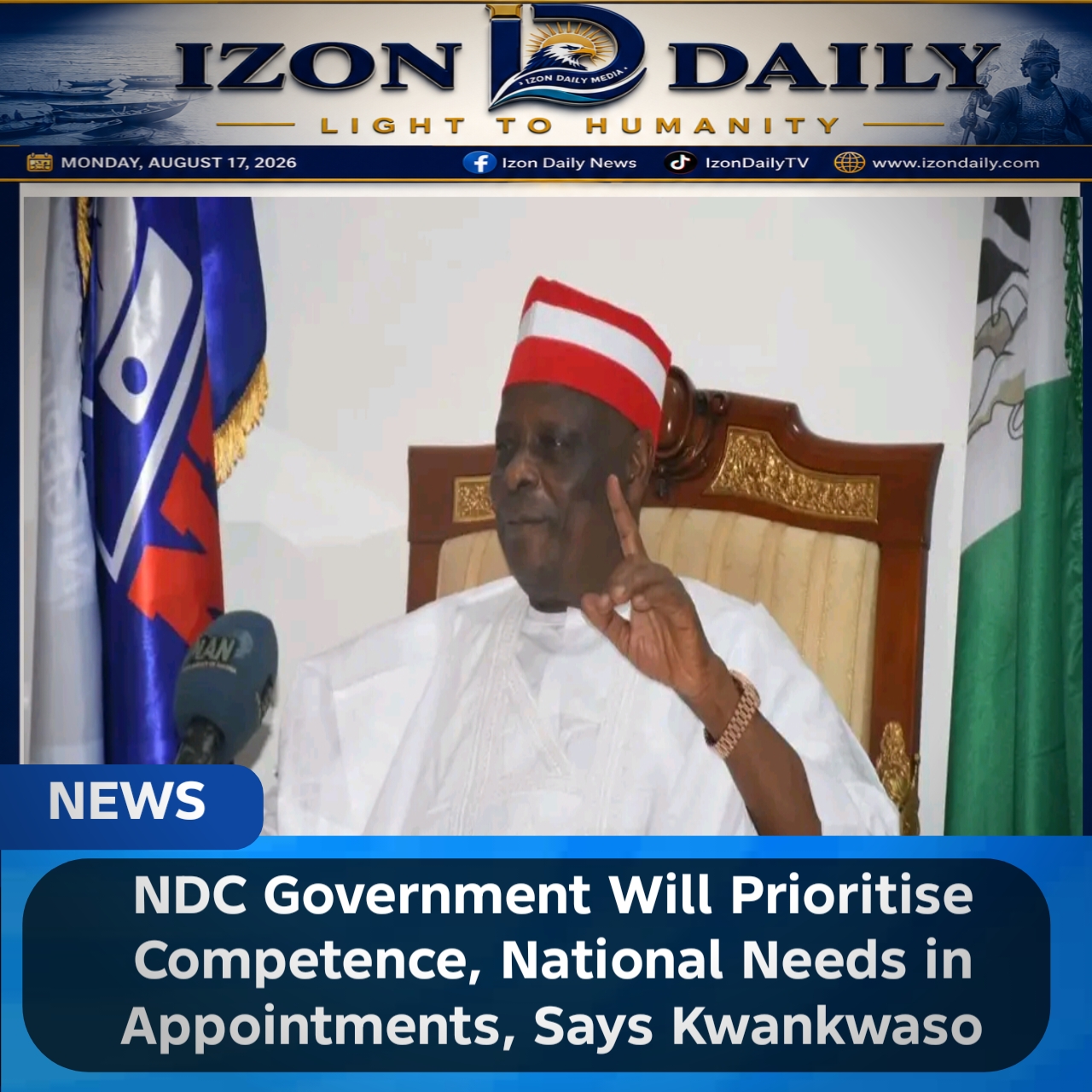
The Vice-Presidential Candidate of the Nigeria Democratic Congress (NDC), Sen. Rabiu Kwankwaso, has said political appointments under an NDC administration would be guided by competence, experience and the needs of the country.
Kwankwaso made the statement on Sunday in Abuja while featuring on the News Agency of Nigeria (NAN) Personality Interview Series.
He said an NDC government, if elected in the 2027 presidential election, would not make appointments solely on the basis of political loyalty, personal relationships or party affiliation.
According to him, the administration would seek qualified individuals capable of effectively managing the country’s ministries, departments and agencies.
“Power will be shared according to the needs of the country. Technocrats and qualified politicians with prerequisite knowledge will be appointed,” he said.
Kwankwaso said Nigeria required a combination of technocrats, professionals and experienced politicians to address its complex governance challenges.
He noted that the president and vice-president could not govern the country alone, stressing the importance of appointing capable people to support the administration.
The former defence minister said specialised ministries should be headed or supported by individuals with relevant professional knowledge and experience.
Kwankwaso, a civil engineer and former civil servant, also argued that technocrats should not automatically be regarded as people outside politics, noting that many politicians possess strong professional backgrounds.
He further promised that an NDC administration would avoid unnecessary delays in constituting its cabinet after assuming office.
According to him, elected officials have only four years to deliver on their mandates and should therefore begin implementing their programmes as soon as they take office.
He said competence, experience and capacity would remain key considerations in selecting individuals to serve in an NDC government.
Kwankwaso added that he was comfortable serving as vice-president, stressing that public office should be viewed as an opportunity to contribute to national development rather than as a quest for political status.
He said effective delegation of responsibilities to competent appointees would strengthen governance and improve the quality of se
rvices delivered to Nigerians.